

The Jira alternative for teams where AI does the work
Keep the board, sprints, epics and story points your team knows. Jenzo adds what a task tracker was never built for: every Claude Code, Codex, Cursor and Gemini CLI session lands on the ticket it worked, with its time, model and cost.
Jenzo starts small: four statuses, saved views instead of a query language, and only the planning you used.
Board, Sprints, Projects and Estimates come switched on.
Add idempotency keys to the payments webhook
a 26m fix after a 1h 14m first pass failed review
What maps to what
Pick Jira when you set up and Jenzo lists its views in the order Jira teams use them, named the way you know them. The ones you lean on most come switched on. Turning one off hides it and keeps the data.
| In Jira | In Jenzo | What it does | At setup |
|---|---|---|---|
| Board in Jira | Board | Tickets as cards in To do, In progress, Blocked and Done columns. | ON |
| Sprints in Jira | Sprints | Time-boxed sprints with points, carry-over and AI cost. | ON |
| Epics in Jira | Projects | Tickets grouped into projects with an owner, target date, progress and AI cost. | ON |
| Story points in Jira | Estimates | Story points on tickets, rolled up per sprint and project. | ON |
| Issue links in Jira | Dependencies | Blocked by and blocks between tickets. | One click |
| Filters in Jira | Saved views | Saved filters pinned in the sidebar. | One click |
| Timeline in Jira | Timeline | Tickets and projects from start date to due date. | One click |
| Backlog grooming in Jira | Triage | An inbox for new tickets: accept, assign or decline. | One click |
| Work log in Jira | Time tracking | People log or time their own hours on tickets. AI time is always measured. | One click |
Also there when you want them: Calendar.
Bring your Jira tickets over
Pick Jira at setup
Board, Sprints, Projects and Estimates come ticked. Tick more now or any time later.
Import your Jira tickets
Upload the CSV you export from Jira with all fields. A preview comes first, with each Jira status mapped to To do, In progress, Blocked or Done for you to change. Summaries, descriptions, labels, assignees, due dates, story points, projects, sprints, parent links and blocking links come over. Run it again and tickets update instead of duplicating. An import undoes in one step, and the report after it lists every row that was skipped or failed, with the reason. Prefer we do it? Upload the export and our team imports it and checks every row with you.
Connect your AI
Claude Code, Codex, Cursor and Gemini CLI connect over MCP. From then on they open, log and close their own tickets.
People match to your workspace members by email, or by exact name when the export has no email.
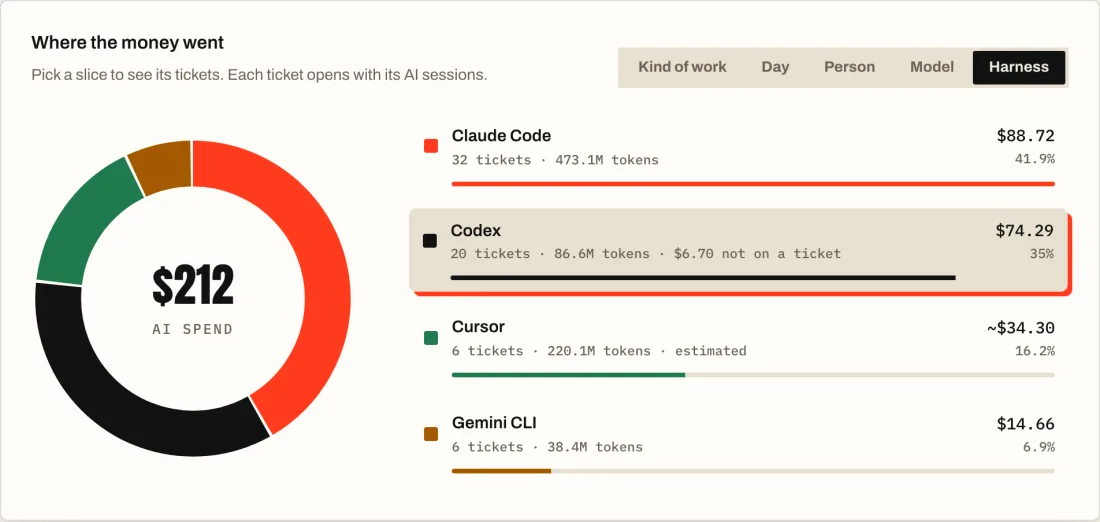
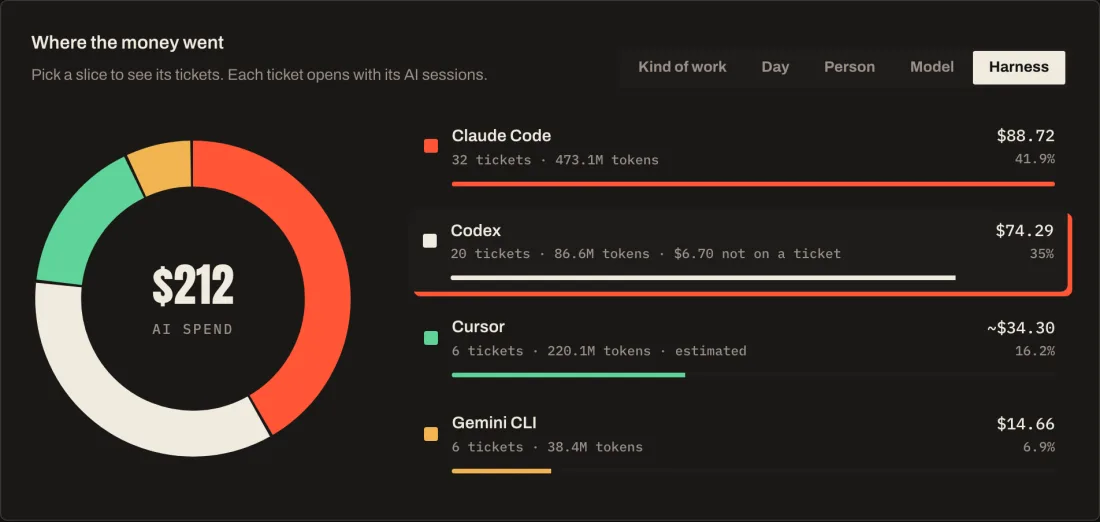
See which ticket each AI session and dollar went to
Jira lets you assign work to coding agents, with reviews and audit trails tied to your permissions (Atlassian). Your team also runs Claude Code, Codex and Cursor on their own machines. Jenzo records those sessions on the ticket they worked: who launched them, how long the AI ran, which model, and what it cost.
- Per ticket, project and sprint: what a piece of work really cost in AI.
- Per person: every AI session is tied to the human who ran it.
- Measured or estimated: every figure says which.
More on this: AI cost per ticket and Claude Code usage per developer.
What Jenzo does not do
Better you hear it here than after the import.
Four statuses, not custom workflows. Your Jira statuses map onto To do, In progress, Blocked and Done.
No custom fields. Use tags, projects and estimates instead.
The Timeline is read-only. Reschedule on the Calendar or on the ticket.
No JQL and no Marketplace apps. Saved views filter by assignee, status, priority, tag, project and sprint.
No docs or wiki. Jenzo is the tickets and the AI work on them.
Questions
Will epics and story points come over?
Yes. Epics map to Projects and story points to Estimates, which roll up per sprint and per project next to the AI cost of the same work. Imported tickets keep their project, sprint, estimate and blocked by links.
Can we run Jira and Jenzo side by side for a while?
Yes. Every imported ticket keeps its Jira id, so running the import again updates what is already there instead of making duplicates. Each import is a batch you can undo in one step.
Do we have to use AI tools to get value from Jenzo?
No. Jenzo works as a ticket tracker for people. The AI side starts when someone connects Claude Code, Codex, Cursor or Gemini CLI over MCP: from then on those sessions open, log and close their own tickets.
Which AI tools does Jenzo track, and how exactly?
Claude Code, Codex and Gemini CLI are measured from the session files on the computer, counts only. Cursor keeps no token counts on disk, so its cost is estimated from the tokens each session reports, and marked so.
What happens if we turn a view off?
It disappears from the sidebar and nothing else changes. The data stays, and the API and MCP still read and write it.