

The ClickUp alternative for teams where AI does the work
Keep the board, calendar and Gantt your team knows. Jenzo adds what a task tracker was never built for: every Claude Code, Codex, Cursor and Gemini CLI session lands on the ticket it worked, with its time, model and cost.
For teams that want fewer views, not more: Jenzo starts with Today, the queue and AI, and you switch on only what you used.
Board, Calendar and Projects come switched on.
Add idempotency keys to the payments webhook
a 26m fix after a 1h 14m first pass failed review
What maps to what
Pick ClickUp when you set up and Jenzo lists its views in the order ClickUp teams use them, named the way you know them. The ones you lean on most come switched on. Turning one off hides it and keeps the data.
| In ClickUp | In Jenzo | What it does | At setup |
|---|---|---|---|
| Board view in ClickUp | Board | Tickets as cards in To do, In progress, Blocked and Done columns. | ON |
| Calendar view in ClickUp | Calendar | Tickets on a month grid by start and due date. | ON |
| Gantt in ClickUp | Timeline | Tickets and projects from start date to due date. | One click |
| Folders and Lists in ClickUp | Projects | Tickets grouped into projects with an owner, target date, progress and AI cost. | ON |
| Sprints in ClickUp | Sprints | Time-boxed sprints with points, carry-over and AI cost. | One click |
| Sprint Points in ClickUp | Estimates | Story points on tickets, rolled up per sprint and project. | One click |
| Dependencies in ClickUp | Dependencies | Blocked by and blocks between tickets. | One click |
| Saved views in ClickUp | Saved views | Saved filters pinned in the sidebar. | One click |
| Time tracking in ClickUp | Time tracking | People log or time their own hours on tickets. AI time is always measured. | One click |
Also there when you want them: Triage.
Bring your ClickUp tickets over
Pick ClickUp at setup
Board, Calendar and Projects come ticked. Tick more now or any time later.
Import your ClickUp tickets
Upload the CSV from ClickUp's Import and export settings, or paste a personal API token that is used once to read your tasks and never stored. A preview comes first, with each ClickUp status mapped to To do, In progress, Blocked or Done for you to change. Titles, descriptions, tags, assignees, start and due dates, sprint points, subtasks and Lists (as projects) come over, and the API token adds dependencies. Run it again and tickets update instead of duplicating. An import undoes in one step, and the report after it lists every row that was skipped or failed, with the reason. Prefer we do it? Upload the export and our team imports it and checks every row with you.
Connect your AI
Claude Code, Codex, Cursor and Gemini CLI connect over MCP. From then on they open, log and close their own tickets.
People match to your workspace members by email, or by exact name when the export has no email.
See which ticket each AI session and dollar went to
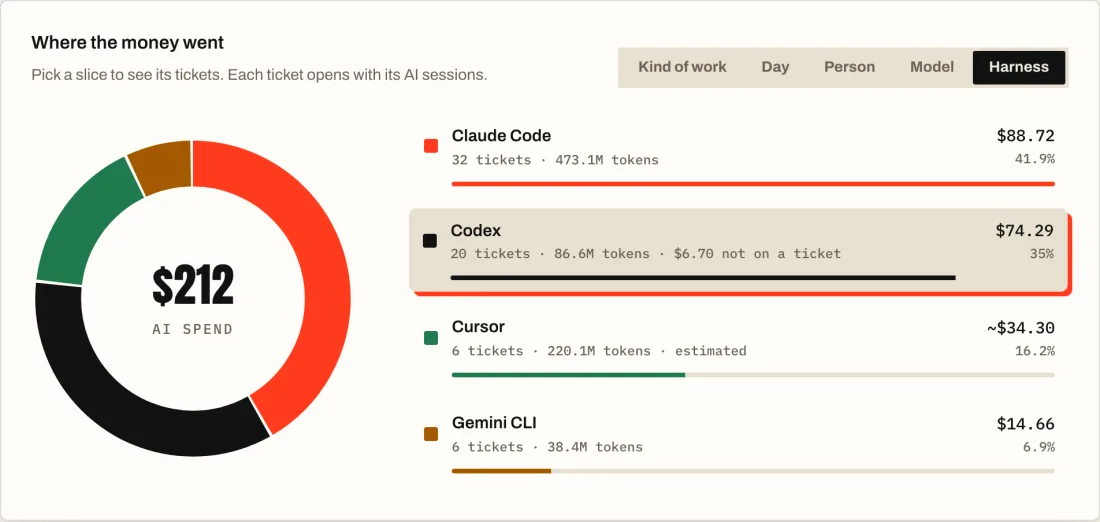
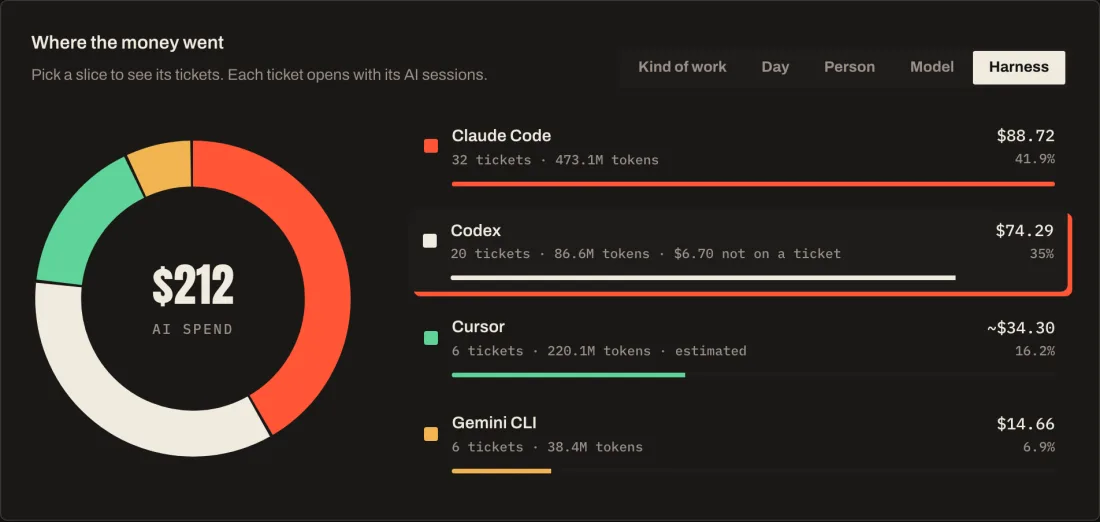
ClickUp holds the work your team plans. Your team also runs Claude Code, Codex and Cursor on their own machines. Jenzo records those sessions on the ticket they worked: who launched them, how long the AI ran, which model, and what it cost.
- Per ticket, project and sprint: what a piece of work really cost in AI.
- Per person: every AI session is tied to the human who ran it.
- Measured or estimated: every figure says which.
More on this: AI cost per ticket and Claude Code usage per developer.
What Jenzo does not do
Better you hear it here than after the import.
Four statuses, not custom workflows. Your ClickUp statuses map onto To do, In progress, Blocked and Done.
No custom fields. Use tags, projects and estimates instead.
The Timeline is read-only. Reschedule on the Calendar or on the ticket.
No Docs or Whiteboards. Jenzo is the tickets and the AI work on them. Keep documents where they live today.
Not an everything app. Today, the queue, the planning views you pick and the AI work. That is the whole product.
Questions
What happens to our Spaces, Folders and Lists?
In Jenzo the place for them is Projects, each with an owner, target date, progress and AI cost. The importer turns each List into a project. Read with a personal API token it also keeps the Folder name as a tag. It only reads from ClickUp and changes nothing there.
Can we run ClickUp and Jenzo side by side for a while?
Yes. Every imported ticket keeps its ClickUp id, so running the import again updates what is already there instead of making duplicates. Each import is a batch you can undo in one step.
Do we have to use AI tools to get value from Jenzo?
No. Jenzo works as a ticket tracker for people. The AI side starts when someone connects Claude Code, Codex, Cursor or Gemini CLI over MCP: from then on those sessions open, log and close their own tickets.
Which AI tools does Jenzo track, and how exactly?
Claude Code, Codex and Gemini CLI are measured from the session files on the computer, counts only. Cursor keeps no token counts on disk, so its cost is estimated from the tokens each session reports, and marked so.
What happens if we turn a view off?
It disappears from the sidebar and nothing else changes. The data stays, and the API and MCP still read and write it.